In NerdBoyTV Episode #110, Ryan Yee shares terrific gift ideas for Father's Day, including RoyceWare, Google Chrome OS Netbook, AirCurve Play, and Electronic Rock Guitar T-Shirt from ThinkGeek. SEE video demos on NerdBoyTV's YouTube Channel.
Showing posts with label netbook. Show all posts
Showing posts with label netbook. Show all posts
Sunday, June 12, 2011
Father's Day Gifts
In NerdBoyTV Episode #110, Ryan Yee shares terrific gift ideas for Father's Day, including RoyceWare, Google Chrome OS Netbook, AirCurve Play, and Electronic Rock Guitar T-Shirt from ThinkGeek. SEE video demos on NerdBoyTV's YouTube Channel.

Saturday, January 8, 2011
Snap Your Tablet Back Into a Laptop
Courtesy of ABC News Video
Becky Worley reports from this year's CES in Las Vegas and demos the Lenovo LePad, which easily changes from a tablet back into a laptop.
Becky Worley reports from this year's CES in Las Vegas and demos the Lenovo LePad, which easily changes from a tablet back into a laptop.

Sunday, July 11, 2010
30 great games you can play on a Netbook
 Updated: 30 great games you can play on a Netbook | Crave - CNET: "It's time to add a new selection of entries to our list of PC games well-suited for Netbooks. Especially as we expect to see many of these low-cost, low-power laptops in the hands of students during the back-to-school season, it's important to have a little action/RPG/adventure/puzzle break handy when one gets tired of taking lecture notes.
As usual, many of these entries are re-releases of classic games, originally available when even high-end computer hardware was at best comparable with today's entry-level systems. Online services such as Good Old Games and Steam are great resources for these.
One important exception is the new online gaming service OnLive, which takes current high-end PC games, renders the 3D graphics remotely, then streams you the video as you play. It sounds like a crazy idea, but it actually works pretty well, even on Netbooks. Check out our extensive hands-on look at OnLive here.
- Sent using Google Toolbar"
Friday, April 30, 2010
Snazzier Laptops Steal Netbooks' Thunder
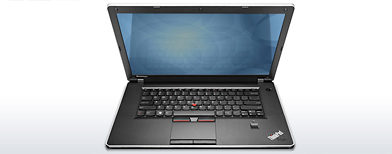 Personal Finance News from Yahoo! Finance: "Pricier, more powerful notebook computers are sucking some of the steam from netbooks, the low-priced darlings that helped fuel sales for the PC industry in the past two years.
Many consumers—searching for more computing power than the compact, portable netbooks can deliver—are opting to pay more for laptops with bigger displays and circuitry suited for jobs like manipulating photos and video, which is beyond the capability of most netbooks.
Other buyers are being seduced by different hardware altogether—including high-end smartphones and Apple Inc.'s (NasdaqGS: AAPL, News) new iPad.
Not many people are ready to call an end to the boom in netbooks, which are machines typically priced around $300, with screens measuring 10.2 inches or less. But another category is also experiencing rapid growth: larger notebooks for a bit more money than netbooks that manufacturers are packing with additional features.
The shift is a sharp reversal of recent buying patterns, when netbooks provided some of the industry's only growth through the recession.
'I think it has taken a lot of folks by surprise,' said Brad Brooks, vice president for Windows consumer software marketing at Microsoft Corp."
Tuesday, February 2, 2010
Notebooks, Netbooks, Smartbooks: Which One Is Best For You?
 Notebooks, Netbooks, Smartbooks: Which One Is Best For You? - Yahoo! News: "America is becoming a nation of booklovers. Notebooks, netbooks and smartbooks, that is, if you believe the computer manufacturers.
Unfortunately, the names and descriptions for these mobile computing devices have become somewhat interchangeable, generating a fair amount of consumer confusion. In terms of buzz, notebooks are yesterday's news. Last year the Next Big Thing was the netbook; this year it's the smartbook. What's the difference?"
Tuesday, January 5, 2010
Netbooks popularity expected to continue in 2010

By Rachel Metz / Associated Press (CLICK to read more)
"Small and inexpensive 'netbooks' were some of the most popular computers in the recession, wooing consumers with their portability and prices that were often below $400. Now with the economy improving, consumers will be asked to open their wallets to new styles of computers, including some costing a bit more.
Among the new offerings being unveiled at this week's International Consumer Electronics Show in Las Vegas: lightweight, medium-sized laptops meant as a step above netbooks in price and performance. There also will be at least one 'smartbook' — a tiny computer that combines elements of netbooks and so-called smart phones.
That is not to say the netbook has reached the end of its line. PC makers including Hewlett-Packard, Lenovo and Toshiba are expected to show off new netbook offerings with such features as touch screens and the latest Intel Atom processors, which offer improved performance over the earlier Atoms that fueled the initial run of netbooks.
But the netbook's popularity has come at a price for the industry: slim profit margins for chipmaker Intel Corp. and the PC manufacturers.
For many PC makers, the rise of netbooks has meant falling revenue and profit from PC divisions. Hewlett-Packard Co., the world's largest computer maker, gets a third of its revenue from its PC business but just 15 percent of the company's operating profit, numbers that are shrinking thanks to netbook sales and price cuts on other machines."
Thursday, November 19, 2009
Nokia’s netbook raises the bar — and the price

By Suzanne Choney / msnbc.com (CLICK to read more)
"A $600 netbook? That's the unsubsidized price of Nokia's new Booklet 3G, the company's venture into the netbook field. Or, it's $300 with an AT&T contract for two years. Neither is an appealing price option. After a year of great success with consumers, is the heretofore 'inexpensive' netbook starting to stray into high-priced territory?
Nokia doesn't like to call its new 2.76-pound device a netbook, but it walks like a netbook and talks like a netbook, albeit one of the best-looking ones out there, with its aluminum, MacBook Pro-like appearance. The Booklet 3G has a 10.1-inch screen and promises a battery life of up to 12 hours, quite good for a netbook or any laptop. It became available this week at Best Buy.
'There are two things that differentiate the Booklet from other netbooks,' said Michael Gartenberg, vice president of strategy and analysis at Interpret, LLC. 'One is somewhat nicer design, but the other is a huge cost difference. The problem is that consumers are going to be hard-pressed to pay a premium on design for a machine that's slower and less capable of similar devices that cost half as much.'"
Sunday, November 15, 2009
Price Is Heavier, But These Laptops Are Very Sleek
 By Walter S. Mossberg / The Wall Street Journal via Yahoo! Finance
"PC makers this fall are trying to get consumers who want small laptops to move up from low-profit netbooks to larger, costlier models called 'ultrathin' or 'thin and light.' These models are lighter and thinner than many regular laptops, but they have bigger screens and keyboards than most netbooks do.
The slim portables tend to start at around $500 and many fall into the $600 to $900 range. You can easily find bigger, heavier laptops for less. But the manufacturers are hoping mobile consumers will be willing to pay a premium for sleekness and long battery life.
I've been testing three examples of the new class: the Toshiba Satellite T135, the Hewlett-Packard Pavilion dm3t and the Lenovo IdeaPad U350. All came equipped with bright 13-inch screens, power-sipping Intel processors and Windows 7 Home Premium. The particular configurations lent me by the manufacturers for testing were priced at $600 for the Toshiba, $840 for the HP and $700 for the Lenovo.
I found the trio a mixed bag, with notable pros and cons for each. These trade-offs left me unable to declare a clear winner. The one you'd like best would depend on your own weighting of various qualities, like the feel of a keyboard or touchpad.
Nevertheless, I found that all three were capable, easy-to-carry laptops. In my tests, each easily handled common consumer tasks at acceptable speeds. The three weighed between 3.5 and 4.2 pounds. All were about an inch thick, or a bit less, at their thinnest points.
I ran all three through my tough battery test, where I turn off all power-saving features, set the screen to maximum brightness, leave Wi-Fi on and play a continuous loop of music.
The Toshiba and the HP turned in excellent results in this battery test, while the Lenovo was disappointing, mainly because it comes with a smaller standard battery. In a re-test, with a $50 optional larger battery, the Lenovo also did very well, but at the cost of added weight and thickness.
In normal use, with power-saving turned on, the Toshiba and HP could easily last for a full work day of typical activities, and the Lenovo could, too, with the optional battery.
Toshiba Satellite T135
This is a sleek, glossy machine that starts at around 3.9 pounds for the 13-inch models. It got the best battery life of the three with a standard battery: five hours and 38 minutes, which I estimate would easily translate into more than seven hours in normal use. It also cost the least, at $600, of the three I tried. My test model came with three gigabytes of memory and a 250-gigabyte hard disk. It was very fast at resuming from sleep, but took more than two minutes to perform a restart with just three common programs running, and nearly two minutes to start up cold.
My main beef with the Toshiba is its keyboard and touchpad buttons. The keyboard felt too rubbery and flexible, and the buttons under the touchpad were in the form of a single, slippery, hard-to-use bar.
HP Pavilion dm3t
This laptop, the most expensive of my test models by far, at $840, was also the heaviest, at 4.2 pounds. The chassis is metal, instead of plastic. Its battery life clocked in at five hours and two minutes in my test, which means you could easily exceed six hours in normal use. My test model came with 3 GB of memory and a huge 500 GB hard disk.
The keyboard felt solid, but the fatal flaw of the dm3 for me was its metallic touchpad, which made the cursor move slowly and even stop at times. Like the Toshiba, the HP took a long time to get going: almost 2.5 minutes for a restart and about two minutes for a cold start.
The HP dm3 also is available for about $100 less when equipped with AMD processors, though HP says those have weaker battery life.
Lenovo IdeaPad U350
In many ways, I liked the U350 best. It was sturdy, but thinner overall than the others because it lacked a bulging battery. The keyboard is firm and well designed, and the touchpad and buttons are comfortable and easy to use. It came with 4 GB of memory and a 320 GB hard disk for its $700 price. It was the only one of the three to restart in under two minutes. It also weighed the least, about 3.5 pounds.
But the IdeaPad's downfall is its small, flat battery, which offered only two hours and 38 minutes of life, or maybe 3.5 to four hours in normal use. With the optional $50 battery, the battery life in my test zoomed up to nearly six hours, which means maybe 7.5 or eight hours in normal use. But that extra battery brought the computer's weight to four pounds and made it thicker.
These thin, light, machines perform adequately and can last a long time unplugged. But I urge you to test them personally before choosing one, to make sure you're comfortable with their designs."
Wednesday, October 14, 2009
HP jump-starting Compaq brand with ultra-cheap machines
 By Christopher Null / Yahoo! Tech
"Remember Compaq? Hewlett-Packard acquired the venerable computer company way back in 2002, but it's kept the name alive as a secondary brand ever since, mainly relegating Compaq to overseas markets (Compaq is particularly popular in Asia) and as second-tier PCs sold on the cheap at warehouse-style stores.
But now HP is looking to breathe a little new life into the Compaq brand, positioning it not just as a label for extremely cheap computer equipment but also as one with mainstream appeal in the U.S.
Today the company is announcing the rollout of a line of ultra-inexpensive PCs, both laptops and desktops, with extreme budgets in mind.
Consider first the Compaq CQ61z (pictured), a 15.6-inch laptop with an AMD Sempron CPU, 2GB of RAM, DVD burner, 160GB hard drive, and discrete graphics. Running Windows 7 Home Premium, the machine costs a nearly unfathomable $399. That price point probably sounds familiar -- it's the usual cost for your average netbook, which in comparison offers a tiny screen, minimal hard drive, and an ultra-low-power Atom CPU.
With the $400 laptop's arrival, Compaq wants potential buyers to ask: Why not jump up to a much larger and more capable system for exactly the same price? I'm having a hard time seeing any reason not to. Seriously, it even has a numeric keypad.
Even better bargains abound for desktop shoppers. The attractive Compaq Presario 4010f has similar specs (with a 250GB hard drive) and starts at just $309 after a $100 rebate.
Both systems are available on Windows 7 launch day, October 22.
Compaq's aggressively inexpensive hardware -- particularly the $399 laptop -- could have massive ramifications for the computer market. Will netbooks finally feel the pinch that they've been giving to standard laptops for two years now? And what kind of pressure will machines like this bring to bear on more expensive notebook PCs? Price war in 3... 2... 1..."
Thursday, October 1, 2009
Verizon's $150 Netbook Deal Is No Deal at All
 By Jeff Bertolucci, PC World
"Attention, suckers: Verizon Wireless will soon offer a Gateway LT2016u netbook with the carrier's Mobile Broadband service built into the device. The Gateway mini-note costs $150 after a $100 mail-in rebate, and the deal requires a 2-year 3G contract. The plan is available starting Oct. 4.
Run, don't walk, from this offer. Even at $150, the Gateway netbook is overpriced, and subscribers will get a bum deal. Here's why:
The LT2016u is a ho-hum netbook. Its specs — a 10.1-inch SD 1024 x 600 display, Intel Atom N270 processor (1.60 GHz), 1 GB RAM, and a 160 GB hard disk — are virtually identical to those of the Acer Aspire One D250, which sells for about $300 at Amazon. The Gateway system does include built-in 3G broadband; but customers are locked into Verizon's usurious monthly fees. (More on those below.) Bottom line: The Gateway discount is far from spectacular."
Sunday, September 6, 2009
SHOW #81 - NerdBoyTV: iPhone, Yahoo! Messenger 10, Steve Jobs
In this episode of NerdBoyTV, Ryan Yee shares links to a video on typing faster on the iPhone, CNET's 2009 Back-To-School Review of laptops and desktops, Yahoo! Messenger 10 (BETA), a CNBC interview with Steve Jobs, and a video on notebooks versus netbooks.
Saturday, September 5, 2009
Friday, September 4, 2009
VIDEO: Notebook versus Netbook: What are the differences?
Netbooks seem to be growing in popularity this year, but ever wonder what they have over a notebook or vice versa? Can’t decide which one to get? Albert goes into detail to help you choose which one is right for you, stay tuned.
Thanks for tuning it's a computer TV my name's Albert in today's a special episode. This episode is for -- more basic -- watchers or viewers. And that what I'm gonna play today is the differences between this. Which is called a netbook verses than this which is called a notebook. Now we look at it here's an Acer aspire one netbook and we are looking at here's a Toshiba notebook. And there are some very common you know obvious difference is but a lot of people don't really know and what's happening is that people are seeing this little. Very affordable very small very cute looking 400 dollars 300 dollar laptop.
Thanks for tuning it's a computer TV my name's Albert in today's a special episode. This episode is for -- more basic -- watchers or viewers. And that what I'm gonna play today is the differences between this. Which is called a netbook verses than this which is called a notebook. Now we look at it here's an Acer aspire one netbook and we are looking at here's a Toshiba notebook. And there are some very common you know obvious difference is but a lot of people don't really know and what's happening is that people are seeing this little. Very affordable very small very cute looking 400 dollars 300 dollar laptop.
Sunday, August 30, 2009
SHOW #80 - NerdBoyTV: Clickfree, Acer, Regal Clothing Co.
In this episode of NerdBoyTV, Ryan Yee discusses Clickfree's DVD backup for your MP3s, his recent purchase of an Acer Aspire One netbook, and the Regal Clothing Co. in the UK.
Friday, August 28, 2009
NerdBoyTV BUY ALERT: Acer Aspire One 10.1 Netbook with 6-cell battery

For UNDER $300, you will not find a better bargain on a terrific netbook like the Acer Aspire One. I bought this one for my son, Brandon, and I've heard nothing but raves from him ;-)
It comes with a 10.1 display, 1GB RAM, 160GB hard drive, built-in webcam/mic, and best of all...a 6-cell battery that holds up to a 5–6 hour charge (great for long flights or coffee shop visits with no AC outlet ;-)
Keep in mind, these are NEW netbooks—NOT REFURBISHED like some I've found on ebay.
This particular ebay vendor also ships via FedEx at NO CHARGE to you!
Plain and simple, this is an EXCELLENT buy! Check it out below...
CLICK here to buy: Acer Aspire One 10.1 Netbook
Thursday, August 27, 2009
Dell's numbers show PC industry staggering back
 By AP: Yahoo! Tech (CLICK to read more)
"Dell Inc.'s second-quarter results reinforce what other tech heavyweights have shown recently about the health of the personal-computer industry: it's still wounded by the recession, but is staggering back to its feet, thanks to consumers, bargain prices and little 'netbook' laptops for surfing the Internet.
The Round Rock, Texas-based company reported Thursday that profit fell 23 percent and sales fell 22 percent in the May-July period. The results beat Wall Street's forecasts, however, sending the shares up more than 6 percent.
Dell's message was similar to those offered by rival Hewlett-Packard Co., the world's No. 1 PC seller, and supplier Intel Corp., the world's biggest computer chip maker, in their latest quarterly reports: consumers are coming back to the stores to buy PCs, but corporations are still being stingy.
Dell added that it might not be until 2010 that businesses open their wallets again. Analysts have been eyeing next year for a turnaround because companies will have new budgets, can't hold on to old PCs forever, and will have a new version of Microsoft Windows available."
Monday, August 24, 2009
Nokia to make laptop, jumping on wireless trend

by Yahoo! Tech (CLICK here to read more)
"Nokia Corp., the world's largest maker of cell phones, said Monday that it will start making a small, light laptop, similar to ones PC manufacturers are already selling through wireless carriers around the world.
The Finnish company says the Nokia Booklet 3G will run Microsoft Corp.'s Windows software, have a 10-inch screen and weigh 2.8 pounds. That puts it squarely in the 'netbook' category pioneered by Taiwanese manufacturers like AsusTek Computer Inc.
Nokia said it would reveal the price and launch date of the PC on Sept. 2. Most netbooks sell for less than $500."
Saturday, August 22, 2009
15 Things to Consider When Shopping for a Netbook

By Ryan Yee
Editor of NerdBoyTV
RAM — How much Random Access Memory or RAM does the netbook come with? A year or so ago, 512MB was pretty standard, but now 1GB is normal—2GB is excellent for a netbook, but it's gonna cost you.
Keep in mind that RAM is not nearly as important on a little netbook as it is on a full-size laptop or desktop computer. Netbooks are primarily for surfing the Internet, so processing speed is not really the issue. It's the speed of the actual Internet connection that counts.
WiFi — This is standard on all netbooks—after all, a netbook IS for surfing the Internet. It better come with built-in WiFi.
Monitor Display Size — How big is the netbook's display? 10.1 inches is pretty standard now, though they can go as low as 8 inches and as high as 12 inches (though these are really more laptops than netbooks). An 11-inch display is about the cut-off point before a netbook becomes a regular laptop.
Don't expect to have too many windows opened at the same time—shouldn't be an issue since, again, that's not the point of having a netbook.
Hard Drive Storage — Standard HD storage size is 160GB, though some laptops go even higher (but you're gonna pay for it). Not really necessary. You can install plenty of program applications and even some graphic-intensive games with 160GB of hard drive storage.
Battery Life — 3 cell or 6 cell? 3 cell is cheaper and currently the standard. You'll get about 2 hours of play out of a single charge. But if you get the 6 cell for about $50 more, you'll get up to 6 hours of play from a single charge—great for cross-country flights. If you plan to plug in the AC/DC all the time, then this doesn't even matter. Go cheap with a 3 cell.
Brand — Acer? HP? Dell? Sony? Asus? Acer and Asus were early pioneers of the netbook—they put out great products at a relatively cheap price. When you get into the name brands like Dell, HP, and Sony, you'll see a difference upward in price (unless there's a sale).
Cost — Do not plan on spending more than $400. Anything more than that and you're starting to get into more "designer" boutique netbooks. A good price is ANYTHING under $350. Under $300 and you're getting a fantastic netbook value. Check Walmart.com and ebay.com—there are plenty of great deals to be had.
Webcam/Mic — These are becoming more standard since everyone Skypes and Yahoos nowadays, but some of the plainer netbooks don't come standard with them.
Bluetooth — If you plan on hooking up Bluetooth devices to your netbook, then it is well-worth it to get a built-in Bluetooth adapter for your netbook. You can easily transfer pictures from your cellphone or listen to music using a wireless headset.
Operating System — Get XP, don't bother with Vista (too slow and bulky for a netbook). If you can get the Open Source Ubuntu, then you will snag an even cheaper netbook cause you won't be paying a Windows licensing fee to Microsoft.
Color — Sometimes, you can get about $20 off if you pick a color that's "on sale." I just got a black netbook that was cheaper than the same blue, red, or white version—go figure.
Keyboard Layout — Make sure you actually touch the keyboard cause they can vary greatly from one netbook to another (where they place certain functions, etc.). You may be surprised how different the keyboard feels on a netbook versus a regular laptop or desktop computer.
If you're a speedy typist, picking a netbook with an odd layout will absolutely drive you wild! Don't skip this step—go into a store and try it if at all possible.
Accessories — What kinds of accessories are available for you netbook? External mouse? Bluetooth adapter? External HD? Pretty carrying bags?
Media Slots — Does it have a standard SD media card slot? Firewire (certainly not standard)?
USB / Mic Jack / Ear Jack — These are pretty standard, but do check to see how many USB ports you will actually get. Everything connects to the computer using a USB nowadays.
Editor of NerdBoyTV
RAM — How much Random Access Memory or RAM does the netbook come with? A year or so ago, 512MB was pretty standard, but now 1GB is normal—2GB is excellent for a netbook, but it's gonna cost you.
Keep in mind that RAM is not nearly as important on a little netbook as it is on a full-size laptop or desktop computer. Netbooks are primarily for surfing the Internet, so processing speed is not really the issue. It's the speed of the actual Internet connection that counts.
WiFi — This is standard on all netbooks—after all, a netbook IS for surfing the Internet. It better come with built-in WiFi.
Monitor Display Size — How big is the netbook's display? 10.1 inches is pretty standard now, though they can go as low as 8 inches and as high as 12 inches (though these are really more laptops than netbooks). An 11-inch display is about the cut-off point before a netbook becomes a regular laptop.
Don't expect to have too many windows opened at the same time—shouldn't be an issue since, again, that's not the point of having a netbook.
Hard Drive Storage — Standard HD storage size is 160GB, though some laptops go even higher (but you're gonna pay for it). Not really necessary. You can install plenty of program applications and even some graphic-intensive games with 160GB of hard drive storage.
Battery Life — 3 cell or 6 cell? 3 cell is cheaper and currently the standard. You'll get about 2 hours of play out of a single charge. But if you get the 6 cell for about $50 more, you'll get up to 6 hours of play from a single charge—great for cross-country flights. If you plan to plug in the AC/DC all the time, then this doesn't even matter. Go cheap with a 3 cell.
Brand — Acer? HP? Dell? Sony? Asus? Acer and Asus were early pioneers of the netbook—they put out great products at a relatively cheap price. When you get into the name brands like Dell, HP, and Sony, you'll see a difference upward in price (unless there's a sale).
Cost — Do not plan on spending more than $400. Anything more than that and you're starting to get into more "designer" boutique netbooks. A good price is ANYTHING under $350. Under $300 and you're getting a fantastic netbook value. Check Walmart.com and ebay.com—there are plenty of great deals to be had.
Webcam/Mic — These are becoming more standard since everyone Skypes and Yahoos nowadays, but some of the plainer netbooks don't come standard with them.
Bluetooth — If you plan on hooking up Bluetooth devices to your netbook, then it is well-worth it to get a built-in Bluetooth adapter for your netbook. You can easily transfer pictures from your cellphone or listen to music using a wireless headset.
Operating System — Get XP, don't bother with Vista (too slow and bulky for a netbook). If you can get the Open Source Ubuntu, then you will snag an even cheaper netbook cause you won't be paying a Windows licensing fee to Microsoft.
Color — Sometimes, you can get about $20 off if you pick a color that's "on sale." I just got a black netbook that was cheaper than the same blue, red, or white version—go figure.
Keyboard Layout — Make sure you actually touch the keyboard cause they can vary greatly from one netbook to another (where they place certain functions, etc.). You may be surprised how different the keyboard feels on a netbook versus a regular laptop or desktop computer.
If you're a speedy typist, picking a netbook with an odd layout will absolutely drive you wild! Don't skip this step—go into a store and try it if at all possible.
Accessories — What kinds of accessories are available for you netbook? External mouse? Bluetooth adapter? External HD? Pretty carrying bags?
Media Slots — Does it have a standard SD media card slot? Firewire (certainly not standard)?
USB / Mic Jack / Ear Jack — These are pretty standard, but do check to see how many USB ports you will actually get. Everything connects to the computer using a USB nowadays.
Tuesday, August 18, 2009
Dell gets thin: Inspiron 11z debuts for only $399
 Crave - CNET: "While much was made of Dell killing off its Mini 12 Netbook recently, one question raised was: what might fill that 11-to-12-inch void in the future? That question is answered, in part, with today's announcement of the Dell Inspiron 11z, an 11.6-inch thin-and-light weighing only 3 pounds. How thin? At its thickest point: 1.02 inches, according to Dell's specs. This is Dell's first real entry into thin-and-light, a category that's been gaining momentum recently (the Acer Aspire Timeline 3810T, MSI X340, and Lenovo IdeaPad U350 to name a few).
Inside, there's no Atom processor, but instead a single-core 1.2 GHz Intel ULV Celeron 723. Equipped with a three-cell battery, Dell promises long battery life in a chassis that's '24 percent smaller than 14-inch laptops' (but this is an 11.6-inch laptop, so how is that fair?). Unfortunately, that 'long battery life' equates to 3 hours in the press release, but we'll remain optimistic. The keyboard is 92 percent standard-size, close to a regular laptop experience (although sometimes we've found that small differences in ergonomics can be disorienting). Like a Netbook and most thin-and-lights, the 11z has no optical drive.
One of the best features is the price: Dell's Web site lists the Inspiron 11z as $399, the same cost as a Netbook."
Sunday, August 16, 2009
Subscribe to:
Posts (Atom)